
Creatine chews, made for women, at the full 5g clinical dose
Creatine chews are a chewable, pre-measured form of creatine monohydrate — the most-researched form — that you take like a soft candy, with no powder, shaker, or pills. The best ones deliver the full 5g clinical dose. Aphia packs that 5g into four strawberry-lemonade chews, third-party tested and made for women. New to the format? Start with what creatine chews are.
- Full 5g clinical dose
- Third-party lab tested
- Made in the USA
- 30-day money-back guarantee
The 5g standard — and why it matters
Decades of research converge on one number: 5 grams of creatine monohydrate a day. That’s the dose shown to saturate your muscles and support strength, power, and recovery when paired with movement (Kreider et al., 2017; Buford et al., 2007). It’s also the form every serious study uses — creatine monohydrate is the most-researched, most clinically validated form there is.
Here’s the catch most formats hide: many chewables and gummies quietly stop at 1–2 grams, a fraction of the studied dose. If you want the result the research describes, the number on the back matters more than the marketing on the front.
Why chews beat powder and capsules
Powder works — if you actually use it. In practice, a tub means a scoop, a shaker, water, and a gritty texture that settles at the bottom of the glass. Capsules mean swallowing several large pills a day. Both are easy to start and easy to abandon by week three.
Chews remove the friction. You take four, anywhere — no mixing, no aftertaste, no clean-up — and because creatine works by building up in your muscles over weeks, the format you’ll actually keep up with is the one that works. Chews are also gentle on the stomach, which is part of why many women find them easier to tolerate than big powder doses — more on creatine with no bloating.
Why chews beat gummies, specifically
This is where the format really matters. Creatine only works if it’s still creatine by the time you take it — and in warm, moist, acidic conditions, creatine monohydrate can slowly convert into creatinine, an inactive byproduct your body simply excretes (Kreider et al., 2017; Uzzan et al., 2009).
That’s a problem for gummies, which are built on an acidic, moisture-rich base and are often made and stored with heat — exactly the conditions that degrade creatine. It shows up in testing: when independent labs analyzed popular creatine gummies, several delivered far less creatine than their labels claimed, and some contained measurable creatinine — a sign the creatine had broken down (independent lab testing, 2024–2025). Aphia’s chews are formulated dry and low-acid, conditions that favor keeping creatine intact, so the dose is built to stay the dose.
Chews vs gummies, at a glance
Same active ingredient, very different delivery. Here’s how Aphia’s chews stack up against the typical creatine gummy.
- Full 5g per servingThe studied clinical dose, in four chews.
- Dry, low-acid formatConditions that favor keeping creatine intact.
- Third-party lab testedIndependent checks on potency and purity.
- No shaker, no aftertasteTake them anywhere — no mixing, no clean-up.
- ✕Often underdosed (1–2g)Many gummies deliver a fraction of 5g.
- ✕Acidic, moist matrixConditions that can degrade creatine over time.
- ✕Creatine can convert to creatinineAn inactive byproduct your body just excretes.
- ✕Inconsistent label accuracyIndependent testing has flagged gummies for under-delivering.
How Aphia’s chews work
It’s about as simple as a supplement gets: take four chews a day for a full 5g of pure creatine monohydrate — morning, with coffee, or pre-workout. No water, no scoop, no loading phase. Creatine builds up in your muscles over a few weeks, so the only real job is consistency.
Each chew is strawberry lemonade, lightly sweetened, with a short, recognizable ingredient list — third-party tested for purity and heavy metals, vegan-formulated, and made in the USA. It’s Aphia creatine for women, built around the dose that does the work.
Real routines, real reviews
Finally a creatine I don’t dread taking. Four chews, done — and they actually taste like strawberry lemonade.
I switched from gummies that did nothing. A few weeks on Aphia and my lifts started moving again.
No shaker, no bloat, no chalk. It’s the first creatine that survived past the first month for me.


LOW STOCK
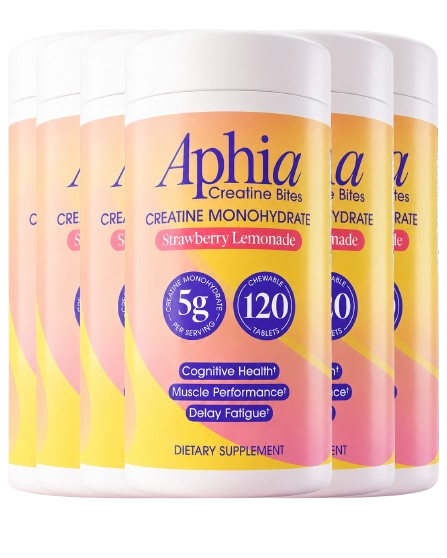
Aphia - Premium Creatine Monohydrate Chews for Women -Strawberry Lemonade
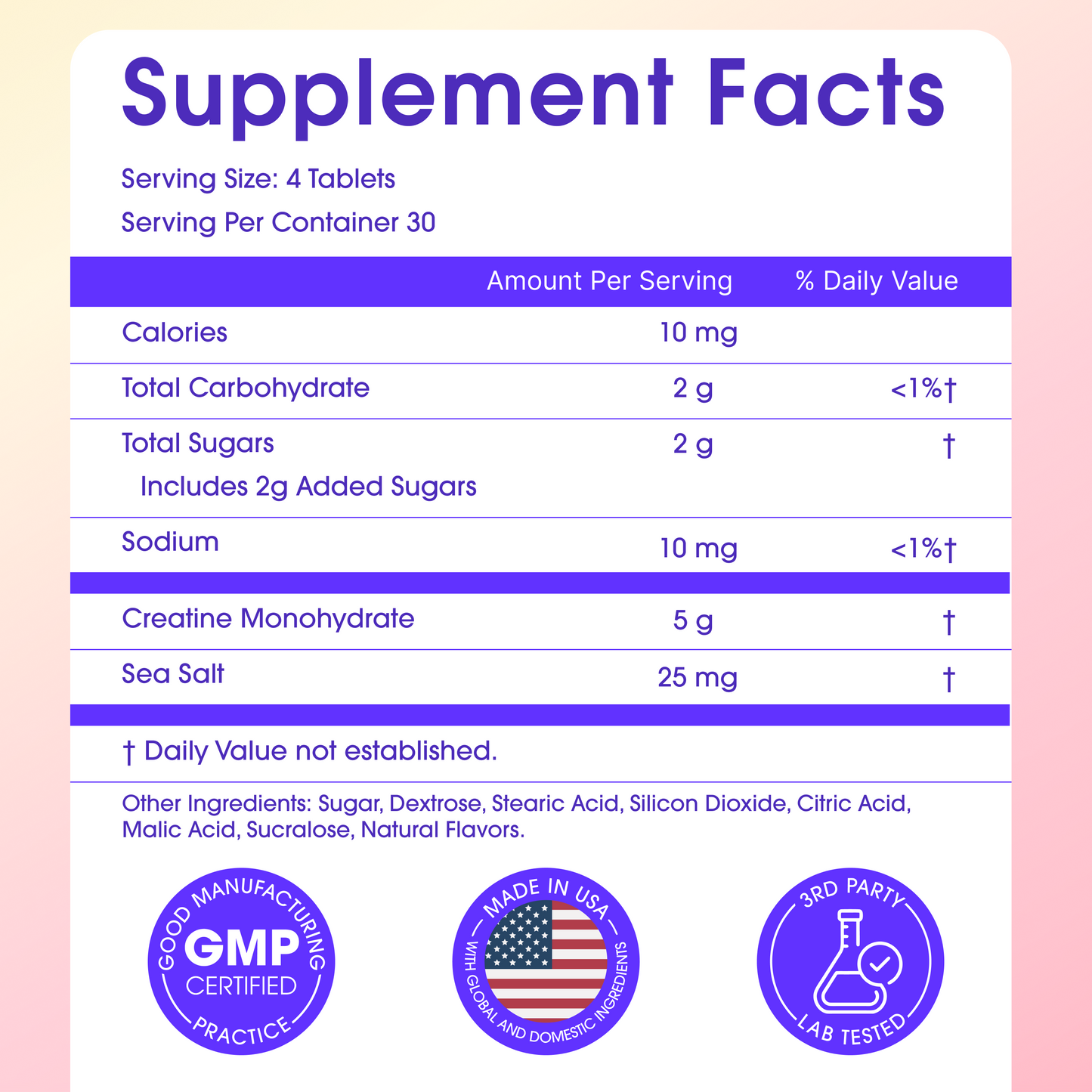
- 5g micronized creatine monohydrate in each serving (the clinically-studied & proven form)
- Strawberry lemonade flavor, lightly sweet and tart
- Ultra low sugar with zero fillers or artificial colors
- 3rd party lab tested for purity, heavy metals, and toxins
- Full month supply: 30 servings per pack
$1.06 per serving · Billed $31.99 every 1 month

30-Day Money-Back Guarantee

Made in the USA

3rd Party Lab Tested
Clinically proven benefits
Clinically proven benefits
Creatine has been shown in studies to support women's health and performance in several key ways:
- Strength + muscle: Greater gains in strength and lean mass when paired with resistance training.
- Bone health: Can help slow bone loss in post-menopausal women, paired with training..
- Performance: Improves short, high-intensity efforts like sprints and lifting.
- Cognition/mood: Can support your body's natural stress response and mood.
- Recovery: Can reduce muscle damage and soreness after intense exercise.
- Hydration: Increases intramuscular water content, supporting cell function and muscle fullness.
- Menopause + perimenopause: Can help counter accelerated muscle and bone loss as estrogen declines, paired with training.
How to use
How to use
Take 4 chews per day, any time that fits your routine: Morning, evening, pre-workout, post-workout, or straight from your bag.
Just chew and go—no water, no mess, no shakers, no bloating.
Consistency matters more than timing, so pick a moment you'll remember and stick with it.
How it works
How it works
Creatine helps your body produce quick energy and supports muscle, bone, and brain function. For women, that translates to:
- Strength & muscle: Supports gains in strength and lean muscle when paired with exercise.
- Bone health: Helps to maintain bone strength, especially important during and after menopause.
- Energy & performance: Fuels short, intense efforts like lifting, sprinting, and HIIT.
- Recovery: Helps to reduce muscle soreness and damage after tough workouts.
- Mind & mood: Supports focus, mental energy, and mood—especially when you're tired or run-down.
How long before I see results?
How long before I see results?
With consistent daily use, most women notice benefits within 2–4 weeks. Creatine works by saturating your muscles over time, so daily consistency is key—muscle stores typically reach full saturation in about 4-6 weeks at 5g per day. Stick with it and the benefits build and build!
Ingredients
Ingredients
- Creatine Monohydrate
- Sea Salt
- Sugar
- Dextrose
- Stearic Acid
- Silicon Dioxide
- Citric Acid
- Malic Acid
- Sucralose
- Natural Flavors
Shipping & refunds
Shipping & refunds
FREE shipping when you subscribe — or on any one-time order over $50. Ships in 1–2 business days.
Your purchase comes with a 100% 30-day money-back guarantee: If you don't love it, for whatever reason you get a full refund. No questions asked.
Subscriptions
Subscriptions
You can pause, skip, change, or cancel your subscription at any time on the website. No phone calls, no hold music, no weird games. You're in full control of your subscription.



Creatine chews, answered
Are creatine chews effective?
Creatine chews work as well as any other format, provided they contain the clinically studied 5g of creatine monohydrate. The delivery form doesn’t change the science; the dose does (Kreider et al., 2017). Aphia’s chews deliver the full 5g, so you’re getting the amount the research is built on.
How many chews should I take per day?
Four Aphia chews give you the full 5g daily dose. There’s no need to load — a steady 5g saturates your muscles over a few weeks. Take them at any time of day; consistency matters more than timing.
Do they taste good?
They’re strawberry lemonade, lightly sweetened — closer to a soft chew than a chalky tablet, with no gritty powder aftertaste. Most women take them with coffee or on the way out the door.
Can I take creatine chews while breastfeeding?
There isn’t enough research on creatine supplementation while breastfeeding to call it established, so the responsible answer is to talk with your healthcare provider before starting or continuing while nursing.
Can I take them with GLP-1 medications?
Creatine is a food-derived compound with no known interaction with GLP-1 medications, and some people use it to help support lean muscle during weight loss. There’s no clinical trial of the combination, though, so check with your prescribing provider before adding it — and stay well hydrated, which matters on GLP-1s anyway.
Is it safe to take creatine chews every day, long-term?
Creatine monohydrate is one of the most-studied supplements available, with no compelling evidence of harm in healthy people even at higher doses over years of use (Kreider et al., 2017). Daily use is exactly how it’s meant to be taken. If you have a kidney condition or take medication, check with your doctor first.